Pages

Showing posts with label storytelling. Show all posts

Saturday, May 14, 2022

The Seven Basic Plots

by Gary Fearon

If you're a writer who's been on Facebook or YouTube, you've probably been presented with a video ad for Ron Howard's Master Class on Directing. In the promo, he makes reference to a theory held by some that there are "seven stories". I thought we might briefly explore those seven story lines from which most tales spring forth.

Christopher Booker is credited for writing the book on the subject, namely The Seven Basic Plots: Why we tell stories. At around 700 pages, it's a thorough analysis of each story line, breaking each down into their own set of stages. For the sake of this post, here is an oversimplification:

Overcoming the Monster
Not always a literal monster, but a major threat to our hero, who takes up the challenge to destroy it.

Rags to Riches
An underdog overcomes the odds to become top dog.


The Quest
Our hero must find a treasure of great value, and embarks on a journey to find it. 


Voyage and Return
Our hero lands in a place unlike home and must learn new rules to prevail. Eventually he/she returns home better than before.


Comedy
A goal is impeded by funny obstacles.  Often, if the main obstacle is a person, they get a come-uppance in the end.

Tragedy
Our hero is his own worst enemy, with qualities that lead to his downfall.

Rebirth
The ultimate character arc, in which the hero transforms into a new being, literally or figuratively.


In reading these, you may have already assessed that many stories contain more than one of these plots, and you'd be correct. For example, isn't The Wizard of Oz a quest for a treasure as well as a voyage to a strange world? Booker himself acknowledges the frequent overlap of two or more of these plots, and even mentions two more which he considers less common:

Rebellion
The hero rebels but ultimately surrenders to, and perhaps joins, the powers that be.

Mystery
The hero seeks to discover the truth of a murder or other unexplained event.

Some analysts of story feel that there are as many as 25 plots, not merely seven. Ron Howard implies that there is just one, but we may have to buy his Master Class to learn what that is.
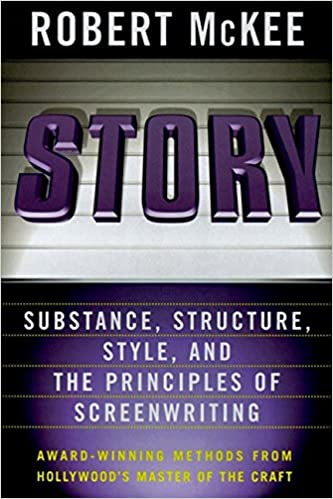
There are writers who dismiss such advice in the name of originality. They contend that referencing previously established templates will make their story too predictable. But in order to break rules with intention, first it helps to know the rules. In his classic book Story, legendary screenwriting expert Robert McKee declares: "A rule says you must do it this way. A principle says this works, and has through all remembered time."  Why reinvent the wheel from scratch when someone has already rounded off the edges for you?

The fact that we can think of our favorite movies or books and see how they fit into one or more of these story lines is testament to their enduring effectiveness and popularity. Could you possibly insert your hero's name into one of these seven plots and refine it into the logline for your next novel? Your own creativity will make the time-tested tale uniquely yours.

Tuesday, December 13, 2016

Five Ways to Get Into Your Character's Head

by Gary Fearon

"If you could read my mind," Gordon Lightfoot once sang, "what a tale my thoughts would tell."  We may approach a story that we write as one single story, but it has more layers for readers to enjoy when we take advantage of the fact that each of our main characters has his or her own hidden history.

How do we unlock those secrets deep inside our fictional friends?  I offer these five easy pathways to perception.

FEEL THE FEAR
Knowing your characters' primary goal for the story (finding the right mate, conquering an enemy, winning a case), imagine the worst that can happen to them.  What will be the consequences if they fail?  What obstacles can you put in place to make it all but impossible to succeed?

Not feeling their pain yet?  Up the stakes by giving them an internal struggle in direct conflict with their goal. Claustrophobia could be a roadblock for a race car driver.  A med student with a queasy stomach also has demons to contend with.  There's wonderful irony afoot when someone is their own biggest obstacle.

GRILL THEM
One by one, sit your heroes, villains and other significant characters across from you in a virtual chair and play doctor.  Dr Sigmund Freud, that is.  Or Dr Joyce Brothers.  (Or Dr Ruth, if you dare.)  Ask your character probing questions about their life, their background, their goals, etc.  But don't stop there.  Get really personal and ask why they became a brain surgeon, why they want to be a rock star, why they promised themselves to see the world before they're 30.

But don't stop there either.  Keep digging deeper until you uncover the real reason why it's a matter of life and death to them that they succeed in their goals.  Persist, because they'll be as evasive about revealing their true selves as you are. Be Barbara Walters and make them cry if you have to. Don't worry, they'll forgive you.

CONSULT AN EXPERT
Your circle of friends and acquaintances is an extravaganza of information and personal experience to help with your character development. Is your hero a policeman? A mailman? A dental hygienist? Someone you know or someone they know would be glad to help you flesh out the inner workings of your character.

In the name of full disclosure, you may want to tell them ahead of time that it's for literary accuracy. They'll be more open and inclined to tell all.  I once pummeled a nurse friend with an inquisition about hospital procedure until she accused, "You're doing research for your book, aren't you?"

IMMERSE YOURSELF
Walk a mile in your character's shoes.  If he or she has a penchant for gambling, spend a day at a casino. If they have a green thumb, get your fingers dirty in the garden or hang out at a nursery.  If they are a beach bum, I can think of worse things than sipping piña coladas in a hammock for the sake of research.

LISTEN THROUGH THEIR EARS
Just like you, your character has very individual taste in music. Would he/she listen to pop tunes, oldies, heavy metal, country, soul, hip-hop, classical? Who are his or her favorite artists? While you're pondering your character, tune into that type of station or call up the genre on AccuRadio.com. Filmmaker Quentin Tarantino says he'll go so far as to make a mix tape to the tune of his characters.

Or maybe your story takes place in a different time period. Someone in the 1940s was hearing big band music.  Two decades earlier, ragtime was the bee's knees.  If your story takes place in a foreign setting, music from that region makes an ideal soundtrack for your writing.

Any of these activities can help a writer hone in on the protagonist, antagonist, and anyone else in the cast. Of course, being the brilliant and imaginative wordsmiths we are, we can simply create our characters to be whomever we want them to be.  But how much more fun is it when they instead reveal themselves to us?