Pages

Sunday, June 4, 2023

In the Summertime

by Gary Fearon

Down here in the South, most students have just wrapped up their school year and begun their summer vacation. Up North, many kids are still hitting the books, and will continue to well into June. Officially, the calendar says the first day of Summer is June 21st. But the days have been hot and summery enough lately that many Southerners consider Memorial Day Weekend the start of the sunny solstice.

"Summertime and the livin' is easy," said George and Ira Gershwin (actually, it was DuBose Heyward, the author of Porgy, the novel on which Porgy and Bess was based). Regardless of whether your daddy's rich and your mama's good lookin', there are plenty of folks who dispute Porgy's sentiment because Summer often means juggling even more things than usual. 

It's not necessarily bad stuff, just more stuff. We tend to fill our summers with as much as we can, hoping to make up for all the months when we've worked so hard, feeling like this is the only chance we have to do the things we don't have enough time for.

Which brings me to the question, did you make any writing resolutions back in January? Did you pledge to write a page a day? 500 words a day? More importantly, have you been successful? I've pondered that very subject with a number of authors lately, and, like me, most of them were faithful to their goals for about a week. 

As honorable people, we make it a point to live up to the promises we make to others. Commitments we make to ourselves, however, are too easy to break, since no one's around to punish us. But don't we do just that, with feelings of disappointment in ourselves, regret, and lost opportunity? If we had started on that novel in January and kept at it for the last 150 days, even a 500-word goal would mean 75,000 words under our belt today. 
Stephen King says he writes 2,000 words a day. Julia Cameron shoots for three pages, roughly 750 words. Your own mileage will vary, as it should, and you might do well to start small. On those days when you surprise yourself because you've written 3,000 words, you'll know you've gotten back your groove. 

To those authors who manage to write two or more books a year, I'm preaching to the choir. I don't know how you do it, but I love you for being a source of hope for the rest of us. 

500 words a day is an easy task when you're having fun. As a matter of fact, this blog post is exactly 500 words long. 

As you enthusiastically make your other plans for the summer, I encourage you to include a recommitment to (or the initiation of) your writing resolution. Remember how important writing is to you and how good it would feel to get your book written by December 31st. 

Then your resolution for 2024 could be all about your next book.


Saturday, May 14, 2022

The Seven Basic Plots

by Gary Fearon

If you're a writer who's been on Facebook or YouTube, you've probably been presented with a video ad for Ron Howard's Master Class on Directing. In the promo, he makes reference to a theory held by some that there are "seven stories". I thought we might briefly explore those seven story lines from which most tales spring forth.

Christopher Booker is credited for writing the book on the subject, namely The Seven Basic Plots: Why we tell stories. At around 700 pages, it's a thorough analysis of each story line, breaking each down into their own set of stages. For the sake of this post, here is an oversimplification:

Overcoming the Monster
Not always a literal monster, but a major threat to our hero, who takes up the challenge to destroy it.

Rags to Riches
An underdog overcomes the odds to become top dog.


The Quest
Our hero must find a treasure of great value, and embarks on a journey to find it. 


Voyage and Return
Our hero lands in a place unlike home and must learn new rules to prevail. Eventually he/she returns home better than before.


Comedy
A goal is impeded by funny obstacles.  Often, if the main obstacle is a person, they get a come-uppance in the end.

Tragedy
Our hero is his own worst enemy, with qualities that lead to his downfall.

Rebirth
The ultimate character arc, in which the hero transforms into a new being, literally or figuratively.


In reading these, you may have already assessed that many stories contain more than one of these plots, and you'd be correct. For example, isn't The Wizard of Oz a quest for a treasure as well as a voyage to a strange world? Booker himself acknowledges the frequent overlap of two or more of these plots, and even mentions two more which he considers less common:

Rebellion
The hero rebels but ultimately surrenders to, and perhaps joins, the powers that be.

Mystery
The hero seeks to discover the truth of a murder or other unexplained event.

Some analysts of story feel that there are as many as 25 plots, not merely seven. Ron Howard implies that there is just one, but we may have to buy his Master Class to learn what that is.

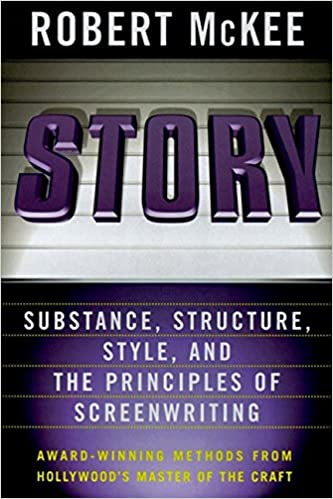
There are writers who dismiss such advice in the name of originality. They contend that referencing previously established templates will make their story too predictable. But in order to break rules with intention, first it helps to know the rules. In his classic book Story, legendary screenwriting expert Robert McKee declares: "A rule says you must do it this way. A principle says this works, and has through all remembered time."  Why reinvent the wheel from scratch when someone has already rounded off the edges for you?

The fact that we can think of our favorite movies or books and see how they fit into one or more of these story lines is testament to their enduring effectiveness and popularity. Could you possibly insert your hero's name into one of these seven plots and refine it into the logline for your next novel? Your own creativity will make the time-tested tale uniquely yours.

Saturday, February 23, 2019

Who wrote the Oscar movies of 2019?

by Gary Fearon

As any writer of creative nonfiction will attest, taking a real person’s life and determining the right parts to give it maximum impact is no easy feat. This year, most of the screenwriters vying for the Best Picture Oscar succeeded in doing just that. Six of the eight nominated stories had their origins in flesh and blood protagonists.

Harry Potter and the Prisoner of Azkaban director Alfonso CuarĂ³n drew upon his childhood to write the semi-autobiographical Roma. He also directed, produced, shot and co-edited the film. This character drama about a housekeeper in Mexico bucks Hollywood tradition: it’s in Spanish, is in black & white, has no musical score, and stars an actress who never acted before but now is up for a Best Actress Oscar.

When a screenwriter has done time as the head writer for Saturday Night Live, it follows that his projects will project a propensity for parody. Such is this tongue-in-cheek take on the political career of former Vice President Dick Cheney. Adam McKay – whose credits also include Anchorman: The Legend of Ron Burgundy and Talladega Nights – wrote and directed this satire, which was originally intended by Paramount Pictures to be a drama.
The real Queen Anne (well, a painting)

Set in 1708, the black comedy The Favourite centers around Lady Sarah and her cousin Abigail, who compete for the attention and affection of Queen Anne. Co-writer and former journalist Deborah Davis went to night school to learn how to write a screenplay, specifically to tell this story of women in power and a female triangle. She admits to having known nothing about Queen Anne before doing research that included Lady Sarah’s memoir and a corresponding account from Winston Churchill.

Sasha Baron Cohen was originally enlisted to portray Freddy Mercury in the Queen biopic Bohemian Rhapsody, but when his reputation as a comedian was deemed to be too distracting, the role (along with a prosthetic overbite) was given to Rami Malek. Mercury’s singing was a combination of Mercury, Malek and an impersonator in this film written by Anthony McCarten, whose other biographical screenplays – The Theory of Everything (Stephen Hawking) and Darkest Hour (Winston Churchill) – were previous Best Picture nominees and garnered Best Actor Oscars for their stars. No doubt Rami Malek is equally hopeful.

The only Best Picture candidate that started out as a book is BlacKkKlansman, based on the memoir Black Klansman by Ron Stallworth. In the 1970s, Stallworth was a black detective who set out to expose the local Colorado chapter of the Ku Klux Klan with the help of a white partner who walked among the KKK. A bombing that is part of the story never actually took place in Stallworth’s experience, but director Spike Lee added it to heighten the action.

Black Panther is one of just two Best Picture nominees not based on a real person. This Marvel comic book hero was brought to life by writers Ryan Coogler (Creed) and Joe Robert Cole (The People v. O.J. Simpson). The movie had its origins when actor Wesley Snipes felt that Africa had been poorly portrayed in films and wanted to do a project of nobility. The project was delayed for many years because of confusion associating it with the Black Panther Party.

The other non-biographical nominee is a story that’s been retold every twenty or thirty years (1937, 1954, 1976, 2018). Each script reflecting the time in which they were made, A Star is Born always centers about a talented ingenue (either an actress or a singer) and her alcoholic mentor from whom she ends up stealing the spotlight. Eric Roth (Forrest Gump) and actor Bradley Cooper co-wrote the script with Will Fetters, who says this most recent installment was inspired by Kurt Cobain.

The actual Anthony Vallelonga ("Tony Lip") and Don Shirley
A casual coffee shop conversation between old friends turned into silver screen gold when Nick Vallelonga asked screenwriter Peter Farrelly (Dumb and Dumber), “Did I ever tell you the story about my father and Dr. [Don] Shirley traveling the South in 1962?” Nick’s father, a bouncer from the Bronx, had been hired by black jazz pianist Shirley to be his chauffeur and bodyguard during an eventful concert tour of the deep South. Aided by Nick’s own memories and letters by his late father, he and Farrelly collaborated with Brian Hayes Curry (Con Air) for months to write the screenplay for the comedy/drama Green Book.

Enjoy cheering on your favorites during the 91st Academy Awards this Sunday night (February 24). In the meantime, you can hear the aforementioned pianist Don Shirley performing his single “WaterBoy” on YouTube. But first, I invite you to check out the 2019 version of my annual video parody/tribute to the Oscars here or below. See you at the movies!


Saturday, December 22, 2018

8 Things Writers Can Learn from Mary Poppins

by Gary Fearon

Thanks to the December 2018 release of Mary Poppins Returns starring Emily Blunt, many moviegoers have been revisiting the 1964 classic starring Julie Andrews and Dick Van Dyke.  Fans of the original can still hum along with the songs of Richard M. Sherman and his brother Robert B. Sherman. They may not be household names, but the story songs they wrote are beloved worldwide via Walt Disney films and parks, including what they considered their crowning glory, Mary Poppins

What many writers don't realize is that, in addition to their Oscar-winning score, the Shermans were key players in developing the story structure of Mary Poppins as well as other Disney favorites. Here are eight things all writers can learn from the prolific songwriting team Walt himself affectionately referred to as "the boys".

COMBINE USEABLE IDEAS
There are eight books in the Mary Poppins series. Scenes and concepts from different books were brought together to create a storyline for the original 1964 screenplay (an approach used for the 2018 sequel as well). Are there any ideas you've put aside that could find a new home in your latest work?

FIND THE REAL STORY
The magical English nanny had many colorful adventures, but Richard & Robert determined that these episodes had no character arcs and weren't enough to carry a story. They convinced Disney that Mary's employers should be distracted parents who rediscover the joy of childhood along with their children. Once a moral was chosen, the adventures took on a common purpose.

COME UP WITH A NEW TWIST
For Mary's signature song, the Shermans wanted to give her a clever proverb, like "An apple a day..." or "A stitch in time..."  The end result ("A spoonful of sugar helps the medicine go down") was inspired by Robert's young son, whose school had administered a polio vaccine placed on sugar cubes for easier consumption. You never know what phrase you write could become an instant classic.

SECONDARY CHARACTERS ARE PEOPLE TOO
In the books, Bert was only a minor character, a street artist known as The Match Man. He has much more prominence in the film, and his role as a chimney sweep was borrowed from a different character in the P.L. Travers series. Bert was given a presence and personality strong enough to be a companion for Mary Poppins. His equally charismatic signature song, "Chim Chim Chiree", won the 1965 Oscar for Best Original Song.

PICK THE RIGHT TIME PERIOD
The Shermans moved the story from the depression-era 1930s to the more hopeful turn of the century. Setting the story in 1910 London also allowed them to develop one character into a suffragette. Speaking of whom...

RISE TO THE CHALLENGE
Actress Glynnis Johns thought she had been cast to get the title role of Mary Poppins, only to learn that Julie Andrews had already been enlisted to play the title role. Walt appeased her by assuring her that the Shermans had written an especially great song just for her to sing. In truth, it wasn't even a thought up to that point. But Richard and Robert picked up the gauntlet and delivered a big and brassy number to give her lesser character a chance to shine.

SAVE SOME THINGS FOR A RAINY DAY
The Shermans wrote 32 songs for possible inclusion in Mary Poppins, but only 14 were used when Walt declared the rest "unnecessary" for the story. Some were repurposed in later Disney features including Bedknobs and Broomsticks and The Jungle Book.

CLOSE THE DOOR
The Sherman brothers avoided distractions like the plague. When it was time to write, they shut out the world around them to concentrate on the project at hand. 

In everything they wrote, Richard and Robert believed that story always comes first. By adopting that same focus, we can give our writing a little extra magic that is practically perfect in every way.

Tuesday, January 23, 2018

Plug Thy Neighbor

by Gary Fearon

If the golden rule of writing is to do unto other writers as you would have them do unto you, that's a pretty easy assignment.  It could be summed up thusly: good will, good wishes, and a good plug.

The majority of authors are expected to do most, if not all, of their own publicity.  So it's a helpful shot in the arm when a fellow author offers their endorsement. When someone says, "So-and-so's new mystery is a page-turner I stayed up all last night to read," that's a convincing testimonial.
We all spend time propping up our platforms, building our branding, and staying savvy with social media.  We sometimes ...


Read the full article here.


Thursday, June 1, 2017

What Sgt. Pepper Can Teach Writers

by Gary Fearon


It was fifty years ago this week that The Beatles released the album that made the music world's head spin. Sgt. Pepper may have "taught the band to play", but he also provided some teachable moments for writers.

A little friendly competition can be a good thing
Wordsmiths readily draw inspiration from other wordsmiths. The Beatles' Rubber Soul album (1965) motivated The Beach Boy's Brian Wilson to create their most ambitious album, Pet Sounds (1966). Then, after hearing Pet Sounds, Paul McCartney set out to create ...


Read the full article here

Tuesday, May 16, 2017

Unfinished Business

by Gary Fearon

Having recently attended the funeral of a former professor, a writer friend was exhibiting a more philosophical side of himself than I usually get to see.  His contemplations led us to the question:

If you knew you had only a year to live, how would you spend it?


I think most of us would share some of the same answers.  We'd make sure our affairs were in order. We'd express our love and thanks to the people who've meant something to us.  We may travel to some place we've always wanted to go.

I'd like to take that question a step further and ask:

Read the full article here

Tuesday, February 21, 2017

That Oscar Feeling!

by Gary Fearon

For my money, there is no greater example of artistic collaboration than movies.  Where else do writing, music, acting, directing, choreography, cinematography, set design, editing, etc all come together as one? The exhaustive list of credits at the end of any feature film catalogs hundreds and sometimes thousands of people who all contributed to the project in a significant way.

Of course, it all begins with a story.  When the Academy Award nominations are announced each year, it's an interesting exercise to look into the written origins of each Best Picture nominee.  In alphabetical order, here are the ones that made the grade for the February 26, 2017 telecast:

Read the full post here

Monday, February 6, 2017

The Other Faces of Conflict

by Gary Fearon

When we think of antagonists from literature, we typically think of the classic villains like Captain Hook, Injun Joe, The Wicked Witch of the West, Hannibal Lecter, Dracula, and the other memorable personifications of evil.  But there are many other faces of conflict not of the human variety that can be put to good use in a story.

Many children's books choose not to pit the hero against another person.  Instead, the dilemma comes from a small difficulty that can be turned into a problem-solving life lesson.  A terrific example is Pete the Cat, who loves his white shoes. When he steps in strawberries that turn his shoes red, what follows is a simple but brilliant story about learning to accept and love yourself, cleverly disguised as a tale about shoes.

Even as adults, conflict in story teaches us to deal with life, each dilemma in its own small way representing the eternal struggle.  A problem is a problem, no matter what form it takes.  Here, then, are some classic inhuman antagonists:

Man vs Beast
What's worse than someone you can't even reason with?  How about someone that wants to eat you? Ask the heroes of Jaws if their adversary doesn't pose a lethal threat.  The irony is that the shark isn't fishing for trouble; he's just doing what comes naturally 'cause it's feeding time.  Likewise, the great white whale in Moby Dick may or may not understand the concept of revenge, but it knows all about self-preservation.

The Great Outdoors
Stephen King's The Girl Who Loved Tom Gordon is one of many examples of a protagonist trying to survive in the wilderness. Again, there is irony in the fact that a forest, waterfall, mountain, etc mean no harm; they don't even have a conscience.  But it's a jungle out there, and a babe in the woods goes back to basic human survival.

Not to say that a tornado or a tempest can't stir up some additional trouble on their own.  The Perfect StormEarthquake and Twister are cinematic examples of how Mother Nature can be a real shrew.

Hard Times
Nellie Olsen wasn't the only thorn in Laura Ingalls' side in her Little House on the Prairie books.  Tales set in the Old West are particularly filled with the struggle just to make it through life under primitive or poverty-stricken conditions. Mix in some of the previous elements like a grizzly bear or no rain for growing crops and you have a multi-layered prairie of pain.

Conflict in Nonfiction
Even when we're writing nonfiction, it's not hard to find conflict because life wouldn't be life without it.  My recently-published short story "Family Tree" in Stories of Music, Volume 2 is primarily a retrospective of the musical family I grew up in.  I wasn't particularly seeking a way to add conflict or even drama to this memoir; it just happened organically because it was a tragedy that put a stop to the musical collaboration in my family, and, ironically, another tragedy is what brought it all back with new magic.

A good guy facing off against a bad guy is classic drama.  But fighting off the challenges of everyday life are readily available story helpers to add extra conflict, or take it out of the mano a mano realm altogether.

Wednesday, December 21, 2016

Famous Songs Inspired by Real People

by Gary Fearon

A couple of years ago on the blog, in a post called Songs in the Key of Life, I chronicled some famous songs whose inspiration came from real-life situations in the writers' lives.  In this post, let's look at a few hits that were inspired by real people, some as well-known as the songs themselves.  I suspect you'll know several of these origins already, but some may surprise you.

This one goes back a ways, but 60s songster Jimmy Dean's claim to fame (long before he became a sausage king) was story songs about people, some imaginary, some drawn from life. While "Big Bad John" was fictional folklore, "P.T. 109" celebrated the heroic Navy background of...
 

Tuesday, December 13, 2016

Five Ways to Get Into Your Character's Head

by Gary Fearon

"If you could read my mind," Gordon Lightfoot once sang, "what a tale my thoughts would tell."  We may approach a story that we write as one single story, but it has more layers for readers to enjoy when we take advantage of the fact that each of our main characters has his or her own hidden history.

How do we unlock those secrets deep inside our fictional friends?  I offer these five easy pathways to perception.

FEEL THE FEAR
Knowing your characters' primary goal for the story (finding the right mate, conquering an enemy, winning a case), imagine the worst that can happen to them.  What will be the consequences if they fail?  What obstacles can you put in place to make it all but impossible to succeed?

Not feeling their pain yet?  Up the stakes by giving them an internal struggle in direct conflict with their goal. Claustrophobia could be a roadblock for a race car driver.  A med student with a queasy stomach also has demons to contend with.  There's wonderful irony afoot when someone is their own biggest obstacle.

GRILL THEM
One by one, sit your heroes, villains and other significant characters across from you in a virtual chair and play doctor.  Dr Sigmund Freud, that is.  Or Dr Joyce Brothers.  (Or Dr Ruth, if you dare.)  Ask your character probing questions about their life, their background, their goals, etc.  But don't stop there.  Get really personal and ask why they became a brain surgeon, why they want to be a rock star, why they promised themselves to see the world before they're 30.

But don't stop there either.  Keep digging deeper until you uncover the real reason why it's a matter of life and death to them that they succeed in their goals.  Persist, because they'll be as evasive about revealing their true selves as you are. Be Barbara Walters and make them cry if you have to. Don't worry, they'll forgive you.

CONSULT AN EXPERT
Your circle of friends and acquaintances is an extravaganza of information and personal experience to help with your character development. Is your hero a policeman? A mailman? A dental hygienist? Someone you know or someone they know would be glad to help you flesh out the inner workings of your character.

In the name of full disclosure, you may want to tell them ahead of time that it's for literary accuracy. They'll be more open and inclined to tell all.  I once pummeled a nurse friend with an inquisition about hospital procedure until she accused, "You're doing research for your book, aren't you?"

IMMERSE YOURSELF
Walk a mile in your character's shoes.  If he or she has a penchant for gambling, spend a day at a casino. If they have a green thumb, get your fingers dirty in the garden or hang out at a nursery.  If they are a beach bum, I can think of worse things than sipping piña coladas in a hammock for the sake of research.

LISTEN THROUGH THEIR EARS
Just like you, your character has very individual taste in music. Would he/she listen to pop tunes, oldies, heavy metal, country, soul, hip-hop, classical? Who are his or her favorite artists? While you're pondering your character, tune into that type of station or call up the genre on AccuRadio.com. Filmmaker Quentin Tarantino says he'll go so far as to make a mix tape to the tune of his characters.

Or maybe your story takes place in a different time period. Someone in the 1940s was hearing big band music.  Two decades earlier, ragtime was the bee's knees.  If your story takes place in a foreign setting, music from that region makes an ideal soundtrack for your writing.

Any of these activities can help a writer hone in on the protagonist, antagonist, and anyone else in the cast. Of course, being the brilliant and imaginative wordsmiths we are, we can simply create our characters to be whomever we want them to be.  But how much more fun is it when they instead reveal themselves to us?


Tuesday, November 29, 2016

Fortunately/Unfortunately

by Gary Fearon


Perhaps you've heard of (or played) a game called "Fortunately/Unfortunately".  It's been around since the 80s, although I only learned of it recently. Apparently I travel in the wrong playgroups.

This verbal game requires nothing more than people to play it. You simply take turns making up a story, alternating sentences with the first words "fortunately" and "unfortunately".  For example:


"Fortunately, I won a trip to Paris."
"Unfortunately, my car had a flat tire on the way to the airport."
"Fortunately, a friend...


Read the full article here

Tuesday, June 14, 2016

Writing Prompts You Can Use Today

by Gary Fearon
 
I'll admit it.  Every once in a while I get stuck for a story idea, and when I'm desperate enough, I resort to googling "writing prompts".  Inevitably it's a dead end because "Write about your favorite Christmas memory" or "What's your biggest pet peeve" isn't what I have in mind.

When talking to writers, I'm always curious to learn whether they like to listen to music while they work, or whether they prefer to have it as quiet as possible. Being aurally oriented myself, I enjoy knowing that many authors listen to music that...

Read the full article here 

Tuesday, February 23, 2016

Based on the Book


by Gary Fearon

Each year at this time, I get a kick out of looking at the Best Picture Oscar nominees with an eye toward how each story originated  This year, a record seven of the eight chosen films were based, at least partially, on books.


THE BIG SHORT
Michael Lewis' nonfiction bestseller about the housing and financial crisis of 2007-2008 was released in 2010, and Paramount picked it up three years later. Dialogue and data-driven, this is one of those films released just under...

Read the full story here

Tuesday, November 3, 2015

Seven Things Writers Can Learn from Marty McFly

by Gary Fearon

October 2015 was a milestone month for fans of Back to the Future, having reached one of the target dates in Marty and Doc's cinematic adventures. Three decades after its release, the trilogy boasts a cult following of DeLorean restorers, cosplay devotees, and less fanatical folk who simply enjoy well-told tales.

With that enduring popularity in mind, I offer seven things that make the Back to the Future series worth a second look for writers...

Read the full article here

Tuesday, October 20, 2015

Getting Into Character

by Gary Fearon

As they do every October, costumed youngsters will soon be ringing doorbells in search of the good stuff.  If recent eBay sales data is any indication, we can expect to see a few Minions, the gals from Frozen, and the perennial assortment of superheroes and princesses.

A neighbor friend, whose very young tykes will have their first foray into the fray this year, showed me a photo of them wearing their Mario & Luigi costumes, over which I appropriately fawned, all the while wondering how these video game plumbers from ancient history have...

Read the full article here

Tuesday, August 11, 2015

Look Out

by Gary Fearon

If you're a media junkie like I am, you find the comings and goings of popular phrases entertaining.  You've probably noticed that "At the end of the day" has all but replaced "The bottom line" to preface a conclusion.  I often wonder who was the first person to say whatever is the phrase of the day.

Some years ago, a famous magazine editor tried to make "mouseburger" a catch phrase, to describe a woman who had to work extra hard to get noticed.  From the moment I read it in an interview, "mouseburger" seemed so random and ridiculous that I think I actually prayed for it not to catch on. That prayer...

Read the full article here

Tuesday, June 30, 2015

There Oughta Be a Flaw

by Gary Fearon

In virtually every story we write, it's a given that we will give our hero challenges to face.  Those obstacles we put in his/her path are likely to be external in nature, delivered by either circumstances or an antagonist.  But we can increase the drama further by slipping in some internal struggles for our hero too.

Besides making our protagonist more lifelike, a character flaw has the power to add the fascinating element of irony.  A hero who becomes the guardian of his brother's kids will have a worse time of it if he had vowed never...

Read the complete article here

Tuesday, June 16, 2015

The Spice of Life

by Gary Fearon

This weekend, a friend shared his childhood memories of the "family movie night" that was a weekly ritual in his home.  Each member of the family got to take turns picking the flick of the week at Blockbuster.  As you can predict, the kids always picked out movies geared toward children, while the adults chose more sufferable fare.

For every Ninja Turtles movie they watched, my friend's dad had them sit down to a classic like On the Waterfront. Or A Streetcar Named Desire. One week it was even Cat on a Hot Tin Roof. (Don't worry, grade school exposure to these...

Tuesday, June 2, 2015

10 Things Writers Can Learn from the Beav

by Gary Fearon

Jerry Mathers as The Beaver
Today being June 2ndthe birthday of Jerry MathersI thought it would be a fitting tribute to recognize some of the things any writer can benefit from through the TV classic Leave It to Beaver.

1. Give your characters a believable setting
The fictional town of Mayfield gained credibility via regular reminders of local landmarks like the malt shop, the fire station, and Friends Lake. Leave It to Beaver purposely included more outdoor shots than most other sitcoms of its time. A strong sense of place gives added personality to the story.

2. Find drama in simple things
Nowhere in its run from 1957-1963 do we experience...

Read the full post here